Invertase for Invert Sugar Syrup Production — Enzymatic Sucrose Conversion for Food Manufacturing
Wholesale invertase for syrup producers, bakery and beverage ingredient makers, confectioners and the distributors who supply them. Request a quote with the product, the quantity and the destination.
Invert sugar syrup is sucrose split into glucose and fructose. It stays smooth where a plain sugar syrup would crystallise, holds moisture in baked goods, and dissolves easily in drinks, which is why bakery, beverage and confectionery plants buy it or make it themselves.
Making it in-house with invertase replaces the acid route with a mild enzyme step: dissolve the sucrose, bring the syrup into the enzyme’s working range (pH 4.0–5.5 and 50–60 °C on our grades), add the enzyme, hold until the target inversion is reached, then cool or heat-treat. There is no acid to neutralise afterwards, and the degree of inversion can be stopped where your product needs it, from partial to near-complete.
The business case is control: the same sugar, the same tank, and a syrup that meets the same specification every batch. The dose, hold time and syrup strength that achieve that are set in a pilot batch on your own line; we send the data sheet with the quote so you have a starting point.
Who buys from us: syrup and ingredient manufacturers, bakery and beverage producers, confectioners making fondant and fillings, contract manufacturers, and distributors who resell enzyme by the drum. To request a quote, send the grade (powder or liquid), the quantity per order or per year, the destination country and your application. Prices and lead times are quoted per order.
Batch invert syrup for bakery and filling supply
Ingredient makers invert a sucrose syrup in a heated batch tank, check the endpoint, then cool, standardise and pack for bakery customers. The enzyme route leaves no acid salts to remove, so the syrup tastes clean in fillings, glazes and soft cakes, and it helps keep them moist.
Beverage and syrup-base production
Drink and syrup-base producers use invert syrup because it dissolves quickly and stays clear and pourable in storage. Inverting in-house lets the plant set the sweetness and the degree of inversion to its own recipe instead of buying a fixed syrup.
Partial inversion for confectionery, caramel and frozen desserts
Fondant, caramel, fudge and ice-cream makers often want only part of the sucrose inverted: enough to stop graining and keep a smooth texture through storage and freeze-thaw, without making the product too soft or sticky. Dose and hold time are set to reach that point in a pilot batch.
Enzyme resale and contract supply
Distributors and contract manufacturers buy invertase by the drum to supply several syrup, bakery or confectionery customers. Ask for the lot number, expiry date and data sheet with every drum so each customer can trace what they received.
Product Specifications
| Parameter | Value |
| Activity range | 100,000 – 300,000 SU/g |
| Optimal pH | 4.0 – 5.5 |
| Optimal temperature | 50°C – 60°C |
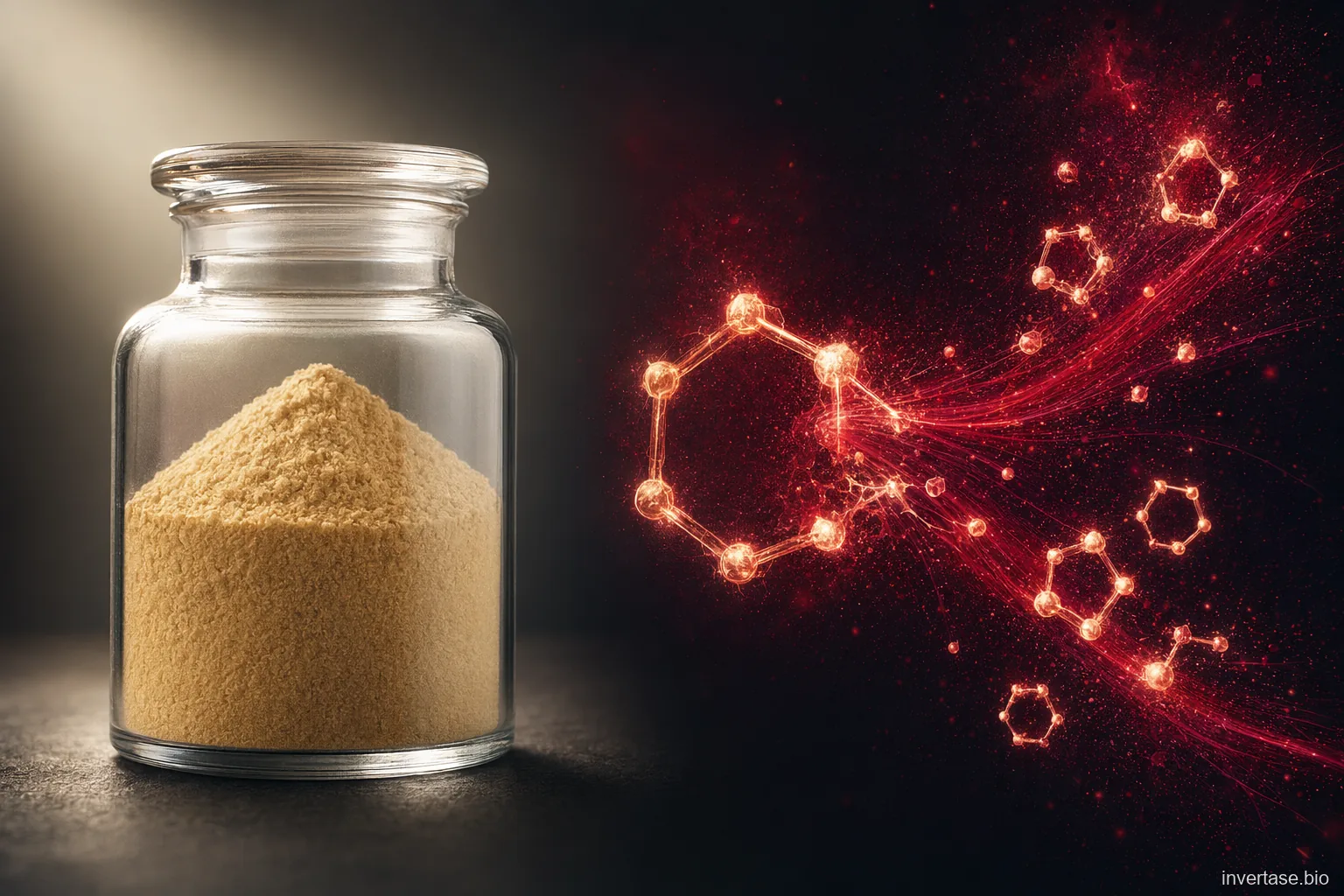
| Form | Light yellow to amber powder or liquid |
| Shelf life | 12 months (sealed, cool, dry place) |
| Packaging | 25 kg drums / 25 kg jerricans |
Frequently Asked Questions
Why make invert syrup with invertase instead of acid?
Acid inversion needs high heat and a neutralising step afterwards, which adds salts and can darken and flavour the syrup. Invertase works under mild conditions, leaves no acid salts, and lets you stop at the degree of inversion your product needs. The trade-off is a hold time in a warm tank, which a pilot batch on your own line will size.
How do I confirm the syrup is inverted?
Plants confirm the endpoint by reducing-sugar testing, polarimetry, or HPLC when they need the exact glucose, fructose and sucrose split for a customer specification. Check at a fixed time in every batch so drift shows up early.
What should a wholesale inquiry include?
The product and grade (powder or liquid), the quantity per order or per year, the destination country, and the application. Add your syrup strength and target inversion if you know them. We quote per order and reply within 24 hours.
Is this invertase suitable for food manufacturing?
Yes. The enzyme is positioned for food-grade industrial use and is suitable for applications such as confectionery, bakery, syrups, and frozen desserts. Buyers should still verify certification status, allergen requirements, and process compatibility during qualification. Typical certifications may include ISO 9001, HALAL, KOSHER, and food-grade documentation. For procurement teams, the important point is to align the enzyme specification with plant standards, co-manufacturer requirements, and export-market compliance needs.
Can the same invertase grade be used for syrup production and fondant softening?
Yes. The same food-grade invertase is used for both, but the process differs: syrup production uses a warm tank and a hold of hours for a fast, complete conversion, while fondant softening uses a lower dose at mixing temperature and converts slowly inside the sealed chocolate over weeks. Tell us which you run and we will suggest a grade and a starting dose for each.
Request a quote: invertase for invert syrup production
Send the grade (powder or liquid), the quantity per order or per year, the destination country and your application: bakery, beverage or confectionery syrup. We reply within 24 hours with a grade recommendation and a quote per order. Free sample with food-grade COA for qualified syrup producers and ingredient manufacturers.
Request a quote